
Among possible new members, former chief economic advisor Arvind Virmani's name is doing the rounds.

Rangarajan, 77, who will replace Suresh Tendulkar, gave his resignation to Rajya Sabha chairman Hamid Ansari, who has accepted it.

The Prime Minister's Economic Advisory Council has projected India's GDP growth at 5.3 per cent in 2013-14.
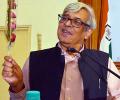
The government on Wednesday reconstituted the Economic Advisory Council to the Prime Minister (EAC-PM) under existing chairman Bibek Debroy, for a period of two years. V Anantha Nageswaran has been dropped, Rakesh Mohan (former deputy governor of RBI), Poonam Gupta (director general of NCAER) and TT Ram Mohan (professor, IIM Ahmedabad) have been appointed as part-time members of the reconstituted EAC-PM. The other part-time members of the Council include Sajid Chenoy, Neelkanth Mishra and Nilesh Shah.
The Prime Minister's EAC is expected to give its outlook on economy for the current fiscal in a week's time.

CRR stand at 5.5 per cent after a 50 basis points cut in January.
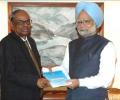
Chairman of the Economic Advisory Council to the Prime Minister (PMEAC) Chakravarthi Rangarajan has resigned following the defeat of the Congress-led UPA in the general elections.
Prime Minister's economic advisory panel chief C Rangarajan has described the dip in factory output in September as 'disappointing' and said industry may grow by just 6 per cent in the current fiscal, as against the earlier projection of 7 per cent.

C Rangarajan, former governor of Reserve Bank of India, was speaking on the topic `the growth path and some concernson the way' at a function at Federation of Gujarat Industries on Monday.
C Rangarajan, chairman of the economic advisory council to the prime minister, has called for revisiting subsidies, dividend distribution tax and tax exemptions.
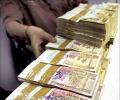
The Reserve Bank of India has been actively doing OMOs or buyback of government bonds to manage liquidity in the system over the last few months.
The Reserve Bank's decision to cut interest rates will stimulate investment and help in anchoring inflationary expectations, Prime Minister's Economic Advisory Council (PMEAC) Chairman C Rangarajan said.
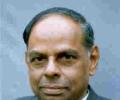
He said the government would not go in for providing stimulus across the board and that only specific sectors would be considered for the measure.

Rangarajan says there was no need to change the inflation comfort level from four-five per cent.
The Prime Minister's Economic Advisory Council Chairman C Rangarajan has said the hike in interest rates will not impact the high economic growth in the face of strong fundamentals.

Rangarajan also called for improvement in the country's corporate-bond market saying that this will help even small companies to raise adequate funds.
The government should act quickly to raise diesel rates to bring them in line with global prices in order to reduce its subsidy bill, Prime Minister's Economic Advisory Council Chairman C Ranagarajan has said.
According to data released on Thursday, Wholesale Price Index-based inflation rose to seven per cent in October from 6.46 per cent in September.
Rangarajan's reaction came after the release of the latest data, which showed headline inflation going up to 9.06 per cent in May from 8.66 per cent in April on the back of rising prices of manufactured products and petrol.
Higher economic growth can be sustained only in an atmosphere of reasonable price stability

On Tuesday, the partially convertible rupee, the worst performing currency among the major global economies, dropped as much as 3.1 percent to 68.12 per dollar.

Interest rates may harden a bit by the end of the current financial year, according to C Rangarajan, chairman of the Prime Minister's Economic Advisory Council.

Inflation measured by the Wholesale Price Index had declined to 6.62 per cent in January. It was 7.18 per cent in December and 7.24 per cent in November.

Ignoring the rate cut demand of India Inc, RBI in its first quarter monetary policy review kept the short-term lending (repo) rate, at which banks borrow from RBI, unchanged at 8 per cent.

D Subbarao reiterated concerns over rising gold imports and its pressure on current account deficit.
FDI in retail would have a limited impact on small retailers, Chairman of PM's Economic Advisory Council C Rangarajan said.

Food inflation is an area of concern for the common man and government with rate of price rise touching as high as 18.32 per cent in the last week of December mainly fueled by mass consumption items like vegetables, milk and protein-based items.

Modern organised retail will be helpful in containing inflation and allowing foreign direct investment (FDI) in multi-brand retail leads to development of back-end infrastructure that will benefit farmers, according to C Rangarajan, Chairman of the Economic Advisory Council to the Prime Minister.
Inflation can drop below 8 per cent if confluence of factors like fall in global crude oil followed by a good monsoon work, Prime Minister's Economic Advisory Council chairman C Rangarajan said.

'Fiscal and monetary space is more constrained in developing countries because of inflation and high borrowing cost.'

Sajjid Chenoy, India economist at JP Morgan is the new part-time member.

Finance, oil ministry tussle over exports.

The private demand is still not picking up and the funds under market stabilisation scheme are also maturing.

The business model of the microfinance sector must change, emphasised C Rangarajan, chairman of the Economic Advisory Council to the Prime Minister, saying that the microfinance movement must have as its ultimate goal the desire to help the poor and enable them to come out of poverty.

Economic growth rate had slipped to decade's low of 5 per cent in 2012-13 mainly on account of the impact of the global financial woes.
The proposed move would lead to dismantling of the administered price mechanism.

In an interview with Business Standard, he says investments would pick up and inflation would fall in the next financial year, providing the Reserve Bank of India the room to cut rates.

High gold imports had contributed to high CAD which stood at 5.4 per cent in the second half of 2012-13 and was creating pressure on the rupee.
 © 2026 Rediff.com - Advertise with us - Disclaimer - Privacy Policy - Sitemap - Feedback - About us - Terms of use - Grievances